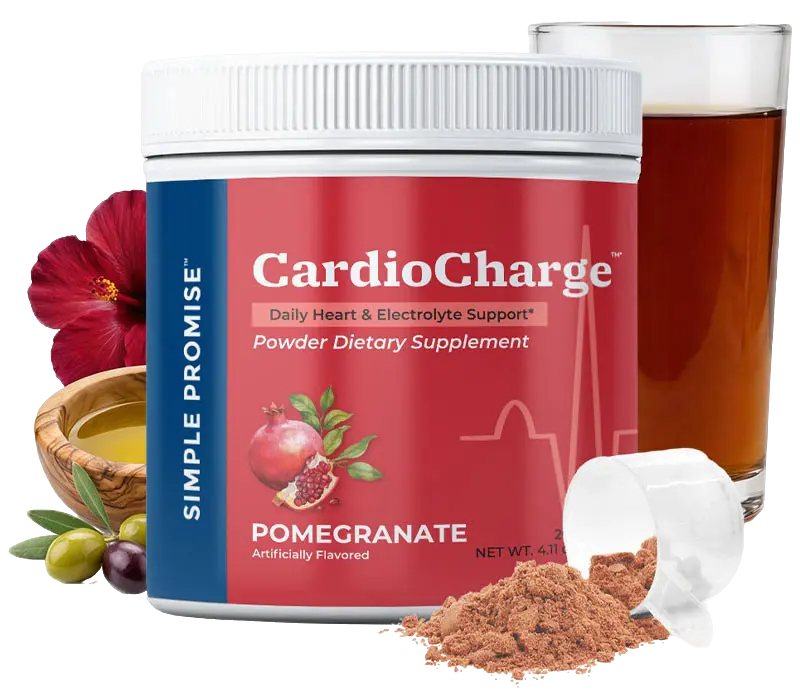
What Minerals Does CardioCharge Provide?
CardioCharge provides 190 mg magnesium, 140 mg sodium and 380 mg potassium per serving.
These electrolytes support normal muscle, nerve and fluid functions throughout the body. A sensible decision starts with the serving amount, the ingredient purpose and the job you expect the product to do. CardioCharge combines minerals, amino-acid compounds and plant extracts, so it should be assessed as a complete daily serving rather than seven isolated headlines.
Extra electrolytes are not automatically suitable for everyone, especially when kidney function or medication affects mineral balance. Nutritional support and medical treatment are different. The formula can add measured nutrients to a routine, while a clinician remains responsible for diagnosis, prescriptions and decisions about diagnosed disease.
Add the amounts to what you already get from food, drinks and other supplements. Put the intended goal in writing before ordering. A clear goal makes it easier to choose the right package and decide later whether continued use makes sense.
- Confirm that 20 servings matches the supply you expect.
- Compare the label with products you already take.
- Choose a review date instead of relying on memory.
- Keep the order record with your health notes.
Clear expectations protect you from both exaggerated promises and an unfair snap judgment after a few servings. That is the standard to use when examining cardiocharge ingredients.
Why Is D-Ribose Included?
D-ribose is included at 3,000 mg because the body uses ribose when building ATP for cellular energy.
This is the largest active amount in one scoop and gives CardioCharge a stronger energy-support angle than a basic electrolyte drink. Look beyond the ingredient names. Amount, form, serving frequency and the rest of your daily intake determine whether a formula fits. A popular nutrient can still be unnecessary when food or another supplement already supplies enough.
Ingredient biology does not prove that every buyer will feel a noticeable energy change. The label is more useful than a testimonial because it can be checked. Personal stories leave out medication, diet, diagnoses and other changes that may have affected the result.
Use the daily serving only and judge tolerance over time. Use the verified figures on this page when comparing options. If another seller hides the serving panel or changes the jar count, leave rather than guessing.
- Check each active amount per scoop.
- Count the true cost per serving.
- Read the other-ingredients line as well as the front label.
- Ask about any ingredient you do not understand.
For this part of the decision, transparency matters more than dramatic wording. That is the standard to use when examining cardiocharge ingredients.
What Does L-Glycine Add?
L-glycine supplies 1,000 mg of an amino acid used in proteins and many normal body processes.
Glycine also contributes to compounds involved in antioxidant defence and tissue structure. Practical fit decides whether a daily product gets used. Taste, mixing, storage and timing sound less exciting than a health promise, but they determine whether the jar becomes a routine or sits in a cupboard.
It should not be treated as a stand-alone treatment for cardiovascular problems. Consistency should never mean pushing through concerning symptoms. A product that causes a repeated problem is not a good fit simply because a larger package was cheaper.
Check other amino-acid products to avoid unnecessary duplication. Build CardioCharge around an existing habit such as breakfast or filling a morning water glass. Keep the scoop dry and mark each serving if you are likely to forget.
- Use one level scoop rather than a kitchen spoon.
- Adjust water for taste without increasing the powder.
- Store the jar closed and away from moisture.
- Do not double a serving after a missed day.
A boring routine followed correctly beats an aggressive routine that lasts one week. That is the standard to use when examining cardiocharge ingredients.
Why Use Hibiscus Extract?
The formula contains 470 mg of a 4:1 hibiscus extract for plant-polyphenol and antioxidant support.
A concentrated extract differs from drinking a weak cup of hibiscus tea because the material is standardized into a measured serving. Price comparisons often go wrong because buyers compare jars instead of servings. CardioCharge contains 20 servings per jar, so the useful figures are the total payment, cost per serving and number of days the order will last.
Hibiscus can be relevant to people taking blood-pressure medicines, so casual stacking is a bad idea. The largest discount is only valuable when the product suits you and the upfront total fits your budget. Buying more to save money can produce the opposite result when the jars remain unused.
Ask a pharmacist or doctor about interactions when medication is involved. Compare one jar at $49, three at $129 and six at $198. Then decide how much uncertainty you are willing to carry in the first order.
- One jar gives the lowest upfront commitment.
- Three jars cover about 60 daily servings.
- Six jars provide the lowest listed unit cost.
- Larger packages include the three digital guides.
Choose the package from your real confidence level, not from the size of the saving printed beside it. That is the standard to use when examining cardiocharge ingredients.
What Is Hytolive?
Hytolive is a branded olive extract supplied at 30 mg per serving.
It concentrates olive-derived polyphenols that are used for antioxidant support. Safety deserves its own decision rather than a small thought after checkout. Magnesium, potassium, sodium and hibiscus can matter when prescriptions, kidney function or fluid restrictions are involved.
The trademark does not turn the ingredient into a medicine or guarantee a clinical result. Online copy cannot see your medical history or current blood results. That is why personal advice from a doctor or pharmacist carries more weight than a general product description.
Judge it as one part of the full formula rather than the entire reason to buy. Take a photo of the label or bring the ingredient list to a professional when you have a diagnosed condition or use regular medicine.
- Check for duplicated magnesium and potassium.
- Ask about blood-pressure drugs and diuretics.
- Stop after a concerning reaction.
- Seek urgent care for severe symptoms.
Avoiding one preventable interaction is worth more than any discount or bonus. That is the standard to use when examining cardiocharge ingredients.
What Else Is on the Label?
Each scoop lists 20 calories, 4 g total carbohydrate and 1 g protein, plus ingredients used for flavor and mixing.
The product is pomegranate flavored and the available label information includes artificial pomegranate flavor. A fair evaluation uses facts that can be recorded. Start date, servings taken, tolerance, delivery condition and any clinician-approved measurements are more reliable than a vague feeling about whether a product worked.
Anyone avoiding artificial flavoring should know this before ordering. Normal day-to-day changes can look meaningful when you check too often. Sleep, meals, stress and activity also move many of the same outcomes people hope to improve.
Read the physical jar label when it arrives because formulas can change. Keep the rest of the routine reasonably stable and review patterns at a sensible interval. Never alter prescribed care to create a cleaner supplement test.
- Record the date of the first serving.
- Note missed days and unwanted effects.
- Use the same conditions for repeat measurements.
- Decide before the refund deadline.
The aim is a calm decision supported by your own record, not a story built around one unusually good or bad day. That is the standard to use when examining cardiocharge ingredients.
How Does This Connect With the Other CardioCharge Guides?
One page cannot answer every buying question without becoming unfocused. Use the guides below when you need a deeper answer on formula, value, safety or ordering.